

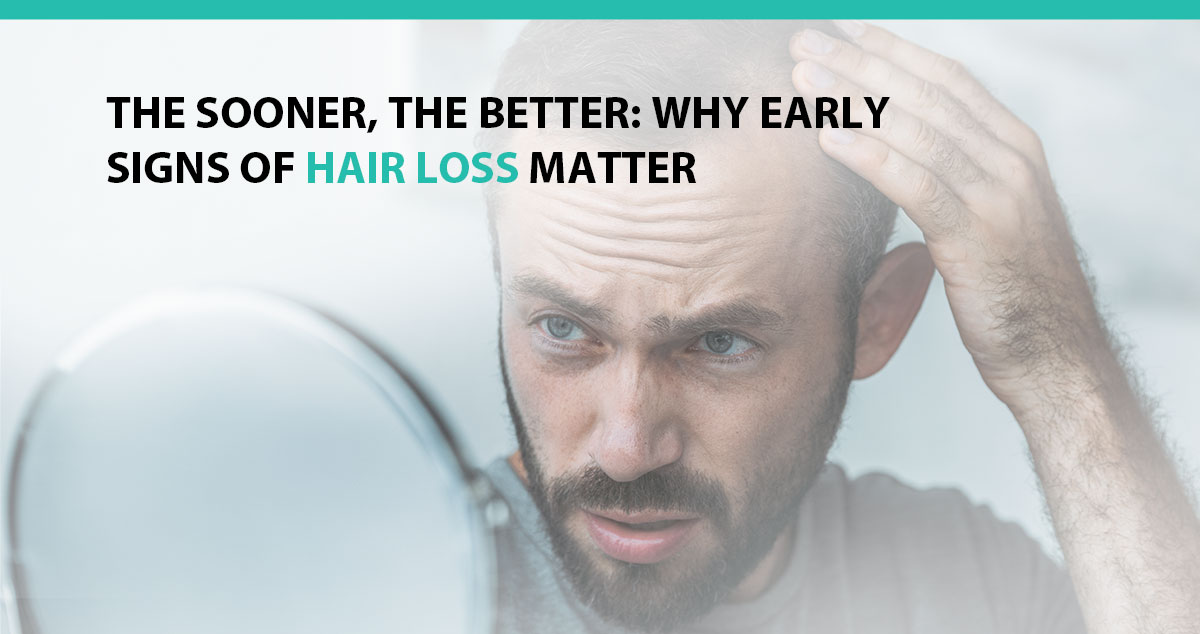
Hair loss does not always begin with a noticeable bald spot. In many people, the earliest signs appear gradually through a receding hairline, a widening hair part, reduced hair volume, or increased shedding. Recognizing these changes early can help you identify the possible cause and explore appropriate treatment options before further thinning occurs.
Hair loss can affect both men and women and may develop due to genetics, hormonal changes, medical conditions, nutritional deficiencies, or physical and emotional stress.
While some types of hair shedding are temporary, others can progress without appropriate management. Understanding the difference is an important first step toward protecting your existing hair.
In this guide, we explain eight early signs of hair loss, common causes, and when professional evaluation may be beneficial.
Why Is It Important to Recognize Hair Loss Early?
Hair growth follows a natural cycle that includes growth, transition, resting, and shedding phases. It is normal to lose some hair every day as part of this process.
However, when more follicles enter the resting or shedding phase than usual, or when hair follicles gradually produce thinner strands, changes in overall hair density can become noticeable.
Early recognition is particularly important for conditions such as androgenetic alopecia, commonly known as male or female pattern hair loss.
In certain cases, treatments may help slow further thinning or support regrowth. Some treatments work better when started during the earlier stages of pattern hair loss.
However, the appropriate approach depends on the underlying diagnosis. Not every type of hair loss requires the same treatment, and some temporary forms of shedding may improve once the triggering factor is resolved.
8 Early Signs of Hair Loss You Should Watch For
Hair loss can appear differently depending on the person’s age, genetics, medical history, and underlying condition.
Here are eight common changes worth paying attention to.
1. A Receding Hairline
A gradually receding hairline is one of the most recognizable early signs of male pattern hair loss.
You may notice that the hair around your temples starts moving backward, creating an M-shaped appearance over time.
The change can be gradual, making it difficult to recognize without comparing photographs taken months apart.
A receding hairline may also become more noticeable around the forehead and temples as hair density decreases.
What to look for:
-
Hairline appearing farther back than before.
-
Thinning around both temples.
-
Reduced density at the front of the scalp.
-
Changes in the overall shape of your hairline.
A changing hairline does not always mean a medical hair-loss condition. Some individuals naturally develop a more mature hairline as they age. An assessment can help distinguish normal changes from progressive thinning.
2. A Widening Hair Part
For women, one of the earliest noticeable indicators of hair thinning can be a widening part.
When hair density decreases around the crown, more scalp may become visible along the parting.
You might notice that your usual hairstyle no longer provides the same coverage or that your scalp becomes easier to see under normal lighting.
What to look for:
-
A wider gap between the hair on either side of the part.
-
More scalp visibility near the crown.
-
Reduced fullness when styling your hair.
-
A gradual change in overall hair density.
Female pattern hair loss can develop gradually, and early recognition may help you seek an appropriate assessment.
3. Increased Hair Shedding
Noticing more hair in your shower drain, hairbrush, or on your pillow can make you concerned about hair loss.
Although everyday shedding is normal, a persistent increase compared with your usual pattern may indicate excessive shedding.
Temporary conditions such as telogen effluvium can develop after significant physical or emotional stress, illness, surgery, childbirth, or rapid weight loss.
In these cases, increased shedding may become noticeable several months after the original trigger.
However, increased shedding can also occur alongside other hair-loss conditions.
What to look for:
-
Noticeably more hair falling during washing.
-
Increased shedding while brushing.
-
Hair collecting on clothing or bedding more frequently.
-
Reduced overall volume following a period of increased shedding.
The important factor is whether the change persists and whether your overall density is decreasing.
4. Thinner Hair Around the Crown
Hair thinning around the crown is another common sign of hereditary pattern hair loss.
You may initially notice that your scalp becomes visible when your hair is wet or when overhead lighting falls directly on the area.
Over time, the thinning region may become more noticeable as hair density decreases.
What to look for:
-
Reduced coverage around the crown.
-
Greater scalp visibility in photographs.
-
Hair appearing thinner near the top of your head.
-
Changes in the fullness of your hairstyle.
Comparing photographs taken under similar lighting and from similar angles can help identify gradual changes.
5. A Thinner Ponytail or Reduced Hair Volume
People with longer hair may notice early thinning through changes in the thickness of their ponytail.
If your ponytail appears smaller than it used to, or your hairstyle feels less full, it could be related to reduced hair density.
This change may develop gradually and can be difficult to identify without paying attention to your usual styling patterns.
What to look for:
-
A smaller ponytail circumference.
-
Less fullness when tying your hair.
-
Reduced volume around the crown.
-
Hair looking flatter despite using the same styling routine.
Changes in hair texture, breakage, and styling habits can also influence appearance, so this sign should be evaluated in context.
6. Hair Becoming Progressively Finer
Some types of hereditary hair loss involve a process known as follicular miniaturization.
During this process, affected follicles gradually produce smaller and finer hairs.
As a result, the hair may appear less dense even when the number of visible strands has not changed dramatically.
What to look for:
-
Individual strands appearing finer than before.
-
Reduced thickness around the temples or crown.
-
Hair losing some of its natural volume.
-
Gradual changes in overall coverage.
Because changes in hair thickness can have different causes, a professional scalp examination can help determine whether follicular miniaturization is occurring.
7. Sudden Bald Patches or Noticeable Hair Loss in Certain Areas
Not all hair loss develops gradually.
Some conditions can cause sudden, clearly defined areas of missing hair.
For example, alopecia areata is an autoimmune condition that can cause sudden patchy hair loss. It may affect the scalp, eyebrows, eyelashes, beard, or other areas of the body.
Other scalp conditions, including infections and inflammatory disorders, can also contribute to localized hair loss.
What to look for:
-
Round or irregular patches without hair.
-
Sudden changes in scalp coverage.
-
Missing hair around the eyebrows or beard.
-
Increased shedding in noticeable clumps.
Sudden patches of hair loss should be evaluated promptly rather than treated with ordinary hair-growth products without a diagnosis.
8. Scalp Itching, Redness, or Discomfort Along With Hair Loss
In some individuals, hair loss develops alongside changes in scalp health.
Persistent itching, burning, tenderness, redness, scaling, or sores may indicate an underlying scalp condition.
Certain inflammatory or infectious conditions can damage hair follicles and may cause permanent hair loss when scarring develops.
What to look for:
-
Persistent scalp itching or burning.
-
Redness or swelling.
-
Pain or tenderness in affected areas.
-
Scaly patches or sores.
-
Hair loss accompanied by scalp inflammation.
These symptoms should not be ignored. A dermatologist can evaluate the scalp and determine whether testing or treatment is necessary.
Early Hair Shedding vs. Progressive Hair Loss: What Is the Difference?
Understanding the difference between shedding and progressive thinning can help you recognize what may be happening to your hair.
| Feature | Temporary hair shedding | Progressive hair loss |
|---|---|---|
| Appearance | Increased hair falling out | Gradual reduction in hair density |
| Development | May follow a physical or emotional trigger | Often develops over time |
| Pattern | Can affect the entire scalp | May affect specific areas |
| Common association | Telogen effluvium | Hereditary pattern hair loss |
| Recovery | May improve after the trigger is addressed | May require ongoing management |
| Evaluation | Useful when shedding persists | Important when thinning progresses |
These are general patterns rather than diagnostic rules. Some people can experience more than one type of hair loss at the same time.
What Causes Early Hair Loss?
Hair loss can develop for several reasons. Identifying the underlying cause is important because the treatment approach depends on the condition.
1. Genetic Factors
Hereditary hair loss is one of the most common causes of progressive thinning in men and women.
Androgenetic alopecia is associated with genetic susceptibility and sensitivity to androgens, including dihydrotestosterone (DHT).
In affected individuals, hair follicles gradually become smaller, producing finer strands and shorter growth cycles.
2. Hormonal Changes
Hormonal changes can influence the hair growth cycle.
Pregnancy, childbirth, menopause, and certain hormonal conditions may be associated with changes in hair shedding or density.
People experiencing persistent hair thinning alongside other hormonal symptoms may benefit from medical evaluation.
3. Nutritional Deficiencies
Hair follicles require adequate nutrients to support normal growth.
Insufficient protein, iron, and other essential nutrients can contribute to certain types of hair shedding.
However, not every case of hair loss is related to nutrition. Testing may be appropriate when a deficiency is suspected, and supplements should be selected based on medical advice.
4. Physical or Emotional Stress
Significant physical or emotional stress can trigger temporary shedding in some individuals.
Common triggers may include:
-
Major illness or high fever.
-
Surgery.
-
Childbirth.
-
Rapid weight loss.
-
Severe emotional stress.
Stress-related shedding does not necessarily mean permanent follicle damage. The underlying trigger and recovery pattern should be assessed.
5. Scalp Conditions
Inflammation, infections, and certain scalp disorders can cause localized or widespread hair loss.
Conditions such as alopecia areata, fungal infections, and some scarring alopecias require different management approaches.
Persistent scalp symptoms should be evaluated instead of relying only on cosmetic products.
Why Early Hair Loss Assessment Matters
Recognizing hair thinning early does not mean you need immediate surgery or medication. It means you have an opportunity to understand what is happening before choosing a treatment.
A professional assessment can help:
Identify the underlying cause: Determine whether the issue involves hereditary hair loss, temporary shedding, a nutritional deficiency, or a scalp condition.
Understand whether treatment is necessary: Some forms of hair shedding may resolve without specific hair-restoration treatment.
Explore appropriate options: Depending on the diagnosis, options may include topical medication, prescription treatment, low-level laser therapy, or other medically appropriate procedures.
Plan for future changes: Individuals with hereditary hair loss may benefit from understanding how thinning could progress and what maintenance may involve.
An early evaluation is about making an informed decision, not rushing into a hair restoration procedure.
What Happens During a Professional Hair Loss Assessment?
A proper assessment starts with understanding your hair-loss history and examining the affected areas.
Depending on your circumstances, the evaluation may include:
Medical and Family History
A clinician may ask about:
-
When you first noticed thinning.
-
Whether the hair loss developed gradually or suddenly.
-
Family history of hair loss.
-
Recent illnesses or major life events.
-
Current medications and supplements.
-
Changes in diet, weight, or hormonal health.
Scalp and Hair Examination
The scalp and hair may be examined for changes in density, hair thickness, inflammation, and patterns of thinning.
A specialist may use magnification or other examination techniques to evaluate the follicles and scalp condition.
Additional Testing When Needed
Blood testing may be recommended when nutritional deficiencies, thyroid conditions, hormonal issues, or other medical causes are suspected.
In selected cases, a scalp biopsy may be necessary.
Not everyone requires laboratory tests or a biopsy. Testing should be guided by the clinical findings.
What Treatment Options May Help With Early Hair Loss?
Treatment depends on the type of hair loss, its progression, and the individual’s health history.
Topical Minoxidil
Topical minoxidil is an established treatment for certain forms of pattern hair loss.
It may help slow thinning and support hair regrowth in suitable individuals.
Results take time, and continued use is generally necessary to maintain the benefits. A healthcare professional can explain the appropriate product, application, and precautions.
Prescription Medications
Certain prescription medications may help manage hereditary hair loss.
Finasteride, for example, is an FDA-approved treatment for male pattern hair loss in men. Other medications may be appropriate for selected patients depending on their diagnosis.
These treatments have potential side effects and are not suitable for everyone.
Low-Level Laser Therapy
Low-level laser therapy is a non-surgical option that may support hair growth in some individuals with hereditary hair loss.
Research is promising, but outcomes vary and treatment requires consistency.
Hair Transplantation
Hair transplantation may be considered for individuals with suitable hair-loss patterns and sufficient donor hair.
The procedure involves relocating hair follicles from a donor area to areas affected by thinning.
However, a hair transplant does not stop hereditary hair loss from progressing in untreated areas.
A physician should evaluate hair-loss stability, donor supply, age, medical history, and long-term expectations before recommending surgery.
Younger individuals may need additional monitoring and non-surgical management before a transplant is considered appropriate.
6 Practical Steps to Take When You Notice Early Hair Loss
If you are noticing changes in your hair, there are several useful steps you can take while arranging an appropriate assessment.
1. Track Changes With Photographs
Take photographs of your hairline, temples, crown, and parting under similar lighting conditions.
Comparing photographs taken periodically can help you identify changes more accurately than relying on memory.
2. Maintain Balanced Nutrition
Include sufficient protein, vegetables, fruits, whole grains, and other nutritious foods in your diet.
Avoid extreme dieting and seek medical advice if you suspect a nutritional deficiency.
3. Avoid Excessive Hairstyling Tension
Tight ponytails, buns, braids, and extensions can place repeated pressure on hair follicles.
Choose comfortable hairstyles and reduce unnecessary tension.
4. Limit Excessive Heat and Chemical Treatments
Frequent heat styling, harsh bleaching, and chemical treatments may weaken hair shafts and increase breakage.
Use gentle styling practices to protect your existing hair.
5. Review Your Medical History and Medications
Certain medications and medical conditions can contribute to hair shedding.
Do not stop prescribed medication on your own. Discuss potential side effects with the prescribing healthcare professional.
6. Seek Professional Guidance
Avoid self-diagnosing based on internet searches or using multiple hair-growth products without knowing the underlying problem.
An appropriate assessment can help you understand which treatments, if any, are suitable.
Frequently Asked Questions About Early Signs of Hair Loss
1. What are the first signs of hair loss?
Early signs may include a receding hairline, widening hair part, reduced hair density around the crown, a thinner ponytail, increased shedding, or progressively finer hair strands.
2. At what age do early signs of hair loss appear?
There is no single age at which hair loss begins. Hereditary hair thinning can become noticeable in adulthood, while other forms of shedding may occur at different stages of life depending on health, hormones, and other factors.
3. Is excessive hair shedding always a sign of permanent hair loss?
No. Temporary conditions such as telogen effluvium can cause increased shedding without permanent follicle damage. Persistent shedding or visible thinning should be evaluated to identify the cause.
4. Can early hair loss be reversed?
Some types of hair loss can improve with appropriate treatment or after the underlying trigger is resolved. Hereditary hair loss may be managed with treatments that slow progression and support regrowth, but outcomes vary.
5. Does a receding hairline always mean baldness?
Not necessarily. Some people develop a naturally mature hairline as they age. A steadily receding hairline accompanied by reduced density may indicate hereditary hair loss and deserves evaluation.
6. Can women experience early signs of pattern hair loss?
Yes. Women commonly notice a widening part, reduced crown density, or a thinner ponytail. The cause should be identified before selecting treatment.
7. Can stress cause sudden hair loss?
Significant physical or emotional stress can trigger temporary shedding. However, sudden bald patches or rapid hair loss can have other causes and should be evaluated promptly.
8. Does early treatment prevent complete baldness?
There is no guarantee. Appropriate treatment can help manage certain types of hair loss, but outcomes depend on the diagnosis, severity, and individual response.
9. Is a hair transplant recommended as soon as hair thinning begins?
No. A transplant is not automatically appropriate for early thinning. Hair-loss progression, donor hair availability, age, and long-term expectations should be evaluated first.
10. When should I consult a hair restoration specialist?
Seek an evaluation if you notice progressive thinning, a receding hairline, persistent shedding, sudden bald patches, or scalp discomfort. Sudden or symptomatic hair loss should be assessed promptly.
Take the Right Step Toward Understanding Your Hair Loss
Hair thinning can be difficult to recognize in its early stages, especially when changes develop gradually.
A receding hairline, widening part, reduced crown density, or persistent shedding can all be reasons to seek a better understanding of your hair health.
The most important step is to identify the underlying cause before choosing a treatment. Early evaluation may help you understand the available options, whether that involves monitoring, medical treatment, or a suitable hair restoration procedure.
At Advanced Medical Hair Institute, Dr. Joseph L. Williams and the team provide personalized hair restoration guidance based on individual hair conditions and treatment goals.
Whether you are noticing the first signs of thinning or exploring long-term restoration options, a professional evaluation can help you make an informed decision.
Contact Advanced Medical Hair Institute in Las Vegas to discuss your hair concerns and explore appropriate hair restoration options.
 ICONIER Digital Agency