


Not every bad hair day is a sign of hair loss, but many people assume it is. A widening part or extra hair in the shower drain can send anyone down a Google rabbit hole, convinced they’re losing their hair for good. But sometimes, the culprit isn’t true hair loss at all; it’s simply damage, stress, or temporary shedding.
At Advanced Medical Hair Institute, we regularly meet patients who arrive terrified about their hair, only to learn that what they’re seeing is preventable, reversible, or not actually a form of alopecia. Knowing the difference between hair damage and true hair loss can save you stress, money, and months of worry.
When should you call your stylist and when should you call Dr. Williams?
Breakage vs. Shedding: Two Very Different Problems
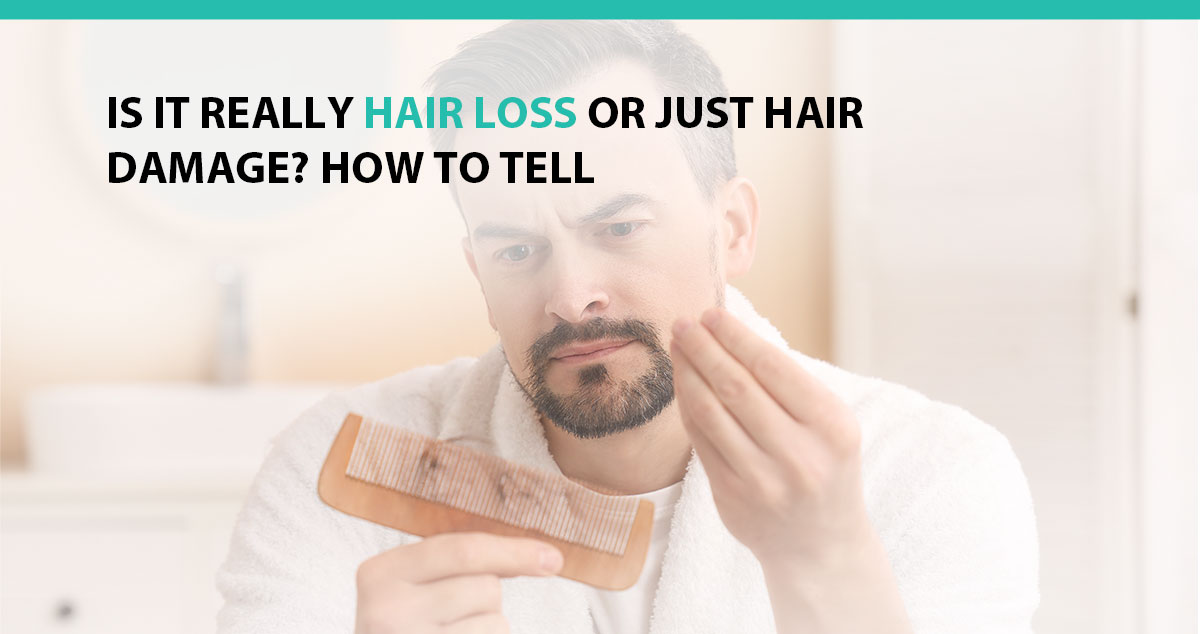
You find strands on your pillow or stuck to your comb, but what exactly fell out?
Shedding happens at the root. The entire strand, including the bulb, comes out. This is normal and part of the natural growth cycle. Most people shed between 50 and 100 hairs per day, sometimes more during times of stress or seasonal change. If you have a white pillowcase and dark hair, shedding may be more noticeable. Same is true for a dark pillowcase and light hair. The contrast helps magnify what’s going on behind the scenes.
Breakage, on the other hand, happens along the length of the strand. Hair snaps due to heat damage, chemical processing, tight hairstyles, or over-brushing. Breakage creates the illusion of thinning, even though the follicle itself is still healthy.
In Who You Gonna Call?, we explored why breakage sends many people to a hair restoration clinic when what they really need is a stylist’s scissors, gentle products, and less heat.
How to tell the difference:
- If you see short, uneven pieces, it’s breakage.
- If you see full-length strands with bulbs, that’s shedding.
- If you see both, you may be dealing with stress, damage, and hair loss simultaneously – a common combination.
Miniaturization vs. Naturally Fine Hair
Not everyone with thin-looking hair is experiencing hair loss. Some people naturally have delicate, fine-diameter strands; this is genetic and lifelong.
Miniaturization, however, is a hallmark of androgenetic alopecia and one of the earliest warning signs. It occurs when the hormone DHT shrinks follicles over time, causing each new hair to grow in thinner, shorter, and weaker.
This process is explained in Hair Loss Types May Be a Mouthful, where miniaturization is described as the “shrinking” stage before follicles stop producing altogether.
Signs of miniaturization include:
- A slowly widening part
- Thinner ponytail circumference
- Receding temples
- Gradual loss of density
Unlike natural fine hair, miniaturizing follicles won’t improve on their own. Early intervention (whether through medical therapy, LLLT, or FUT/FUE) can preserve what you still have.
Seasonal Shedding… or Early Alopecia?
Everyone sheds more during certain months of the year. Seasonal shedding often peaks in the fall and early spring as hair cycles align. This form of shedding is temporary and usually stabilizes within 6–12 weeks.
But here’s the catch:
Seasonal shedding looks very similar to the early stages of genetic hair loss.
If your shedding:
- lasts longer than six weeks
- reveals visible scalp
- is concentrated at the crown or temples
- reduces density rather than returning to normal
…then you may be dealing with something more than a seasonal shift.
As noted in Taking Action on Hair Loss, early detection dramatically improves your treatment options. Waiting six months “to see what happens” may cost you valuable follicles.
Hormonal Loss vs. Stress Loss
Two of the most common (and confusing) causes of shedding are hormones and stress. And they often overlap.
Hormonal Hair Loss
This is common after:
- pregnancy
- menopause
- thyroid imbalance
- testosterone fluctuations
- certain medications
Hormonal loss often appears as diffuse thinning, not specific patches. In men, it often accelerates male pattern baldness because of increased sensitivity to DHT.
Stress-Related Loss
Described in Vitamins, Minerals, and Supplements and supported by nutritional science, stress-related shedding, called telogen effluvium, pushes many follicles into rest mode simultaneously.
Common triggers:
- major life changes
- illness
- rapid weight loss
- poor diet
- chronic anxiety
- lack of sleep
The good news?
This type of shedding is usually temporary – if you address the root cause.
When stress loss is layered on top of early androgenetic alopecia, the thinning can appear sudden and dramatic. That’s why a thorough medical evaluation matters.
Hair Damage That Mimics Hair Loss
You may not be losing follicles; you may just be harming your hair faster than it can grow.
Common damage sources:
- hot tools
- bleach or dye
- tight ponytails or braids
- friction from hats or helmets
- low-quality hair products
- chlorine or hard water exposure
These don’t kill follicles, but they break hair before it reaches full length, making your hair look and feel thinner.
In these cases, your stylist, not your surgeon, is your first call.
When It’s Time to See a Hair Restoration Specialist
If you’ve ruled out breakage, seasonal shedding, or simple damage, yet the thinning continues, then it may be time to take action.
As highlighted in The Hair Restoration Artist and The Sooner, The Better, early evaluation prevents further follicle loss and expands treatment options.
Dr. Joseph L. Williams can diagnose:
- androgenetic alopecia
- telogen effluvium
- nutritional deficiencies
- hormonal causes
- scarring alopecia
- traction alopecia
- and more
And recommend the right combination of:
- FUT
- FUE
- LLLT
- Nutritional guidance
- Hair MD Rx
- SMP when appropriate
Your follicles deserve an expert eye, especially when your hair’s future is at stake.
Not All Thinning Is Permanent, So Know Which Is Which
Whether you’re dealing with true hair loss or just hair damage, the key is understanding what your hair is telling you. The sooner you identify the cause, the sooner you can stop the cycle and start rebuilding confidence.
If you’re unsure what’s happening on your scalp, you’re not alone. And you shouldn’t be left to guess.
Call 702-257-0888 (Las Vegas) or 888-357-0888 (toll-free) to schedule your private, medical hair evaluation with Dr. Joseph L. Williams.
Your hair has a story to tell. We’ll help you understand it.