

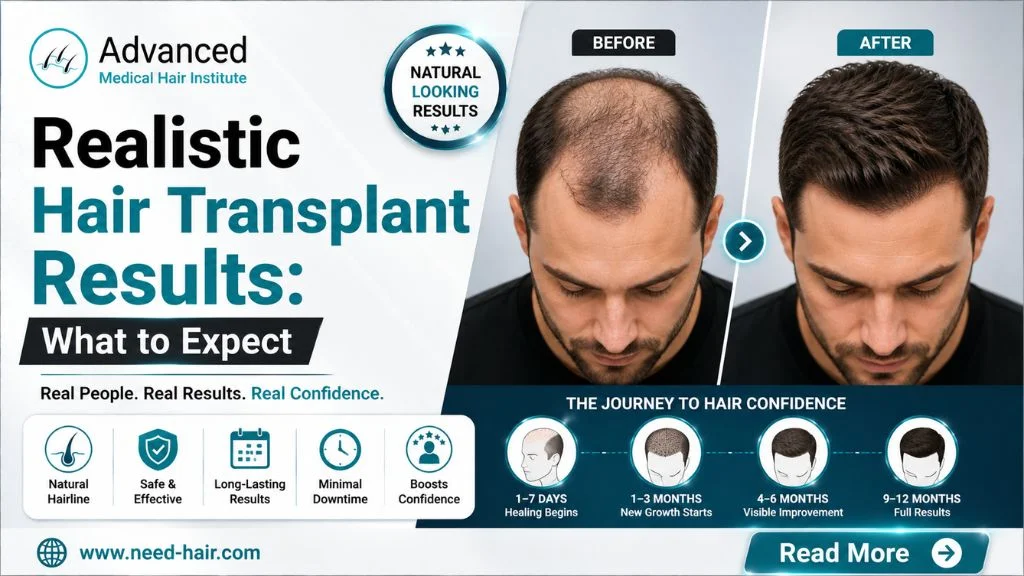
One of the most common mistakes people make when considering a hair transplant is forming their expectations based on the most dramatic before-and-after photos they’ve seen; photos that show almost complete baldness transformed into a full, dense head of hair. While excellent results are absolutely achievable, not every outcome looks like the best-case example. And not every stage of the journey looks the way patients expect, either.
Managing expectations isn’t about lowering them, it’s about giving you an accurate picture so that you can make a confident, informed decision, move through the process without unnecessary anxiety, and appreciate your results for what they genuinely are.
This guide walks you through the complete hair transplant journey before the procedure, during recovery, through the growth phases, and into long-term results with complete honesty.
Before the Transplant: The Consultation and Planning Stage
The quality of your outcome begins well before any follicle is moved. The consultation and planning phase is where the foundation is laid and where the most important decisions are made.
What gets assessed?
- Your current hair loss pattern, severity (Norwood or Ludwig scale), and likely future progression
- Donor area density, hair caliber, and availability
- Scalp laxity and overall scalp health
- Medical history, medications, and any factors affecting healing
- Your aesthetic goals and the realistic coverage achievable
What gets decided?
- Hairline design, position, and shape
- Number of grafts needed to achieve the target coverage
- Graft distribution strategy; where to concentrate density
- Whether any pre-operative preparation (LLLT or prescription therapies) is recommended
- A long-term plan that accounts for continued natural hair loss
This planning stage is where experience and judgment matter most. A conservative, well-planned procedure that accounts for your likely future loss will serve you far better than an aggressive one that looks stunning at 30 but looks odd at 50.
Before the Procedure: Preparation
In the days leading up to your transplant, you’ll receive specific preparation instructions from the clinic. These typically include:
- Avoiding alcohol for 1 week before the procedure (it thins the blood and affects healing)
- Stopping any blood-thinning supplements (such as fish oil, vitamin E, aspirin unless prescribed) for 1–2 weeks
- Refraining from smoking nicotine; significantly impairs healing and graft survival
- Washing your hair normally the morning of the procedure
- Wearing a loose, comfortable button-up shirt on the day of (nothing that goes over your head)
- Arranging transport home as you won’t be able to drive after the procedure
Going into the procedure well-rested, well-hydrated, and having eaten a proper meal makes the experience more comfortable.
Day of Surgery: What It Actually Feels Like
The procedure begins with local anaesthetic administration to both the donor and recipient areas. This is the most uncomfortable part of the day. This is a series of injections that cause a burning sensation for a minute or two. Once the anaesthetic is fully in effect (typically 15–20 minutes), you’ll feel no pain for the duration of the procedure.
For most patients, the rest of the day involves:
- Lying or sitting in a reclined position
- Watching something, listening to music, or simply resting
- Regular breaks for bathroom and meals (the procedure can last 4–8 hours)
- Mild pressure and vibration sensations as extraction and implantation proceed
By the end of the procedure, you’ll be tired (it’s a long day) but the experience is far more manageable than most patients expect beforehand.
The First Week: What You’ll See and Feel
Day 1–2: The scalp may be tender and sensitive. Swelling of the forehead and sometimes around the eyes develops and peaks around day 2–3. Sleeping propped up helps. You will be wearing a bandana after the procedure to help prevent this.
Day 3–5: Most patients feel well enough to return to desk work. Swelling begins to resolve. The donor area, which felt sore and tight, improved noticeably.
Day 5–7: The scalp is still tender to the touch. On day 7 you may remove the bandana and begin washing your hair. Scabs in the recipient area are present but soften with washing.
End of Week 2: Staples are typically removed around this time. Scabs have shed completely. The transplanted hairs may begin to look slightly different some may appear to be growing normally, while others sit still in place. The scalp begins to look more normal overall.
Weeks 3–6: The Shedding Phase; The Most Confusing Part
Around 2–4 weeks after surgery, the transplanted hairs begin to shed. For patients who aren’t prepared for this, it can be alarming and can feel like the transplant is “failing.”
It isn’t. This is completely normal and expected.
The follicle itself, the living structure beneath the skin, remains intact and healthy. The hair shaft simply sheds as the follicle transitions into a resting phase before beginning a new growth cycle in its new location. Almost all patients experience this. The result is a period of several weeks where the recipient area may look similar to (or temporarily worse than) before the procedure.
Understanding this ahead of time and being told it will happen transforms this phase from a source of panic into an expected milestone.
Months 3–6: The Beginning of Real Change
From around month 3, new hair begins to push through from the transplanted follicles. Early growth is often fine and slightly wiry in texture, although it improves significantly as the hairs mature. By month 5–6, meaningful coverage is usually visible and patients start seeing early glimpses of what the final result will look like.
This is also when the emotional experience of the journey shifts from patience and uncertainty to genuine excitement.
Months 6–12: The Most Visible Progress
Months 6 through 12 are where the most visible, satisfying transformation happens. Hair is growing in length and density, the texture is normalizing, and the hairline designed carefully months before is taking its intended shape. Most patients are visibly and meaningfully improved compared to their pre-operative state.
This period is also when patients typically feel comfortable talking about their results and sharing their experience.
Months 12–18: Final Results
By 12–18 months, transplanted hair has fully matured. Hair caliber has normalized. The full density achieved by the procedure is now visible. This is the result that gets photographed and documented and it’s the baseline from which any future planning (additional procedures, ongoing maintenance) takes place.
What Affects the Quality of Results?
Surgeon skill and experience: The single most influential factor. Hairline design, graft placement, angle, and distribution all determined by surgical judgment and technique.
Patient biology: Hair characteristics (curl, caliber, color contrast with scalp), scalp quality, and healing biology vary between individuals and affect outcomes.
Donor hair characteristics: Patients with coarser, curlier hair often achieve better perceived coverage per graft because of the greater visual coverage each hair provides.
Adherence to aftercare: Proper washing, sun protection, avoiding smoking and alcohol post-procedure, and following specific instructions significantly influence healing and graft survival.
Realistic expectations going in: Patients who understand what’s achievable for their specific case, such as, density limitations, future loss, and timeline, experience the journey far more positively.
Frequently Asked Questions
Q: Will I look completely “normal” again after a hair transplant?
Most patients achieve results that look completely natural and indistinguishable from naturally grown hair. The degree of coverage depends on donor availability and the extent of hair loss.
Q: What if I’m not happy with my results?
If results are below expectations after full maturation (18 months), options include a corrective or supplemental procedure. This is why choosing the right clinic from the start is critical.
Q: Do transplanted hairs fall out again over time?
Transplanted follicles, taken from the DHT-resistant donor zone, retain their resistance and grow permanently. However, surrounding natural hair that wasn’t transplanted may continue to thin.
Q: Can I dye or chemically treat transplanted hair?
Yes but wait until the hair is well-established (typically 30 days after surgery) before applying chemical treatments.
Q: What’s the best thing I can do to maximize my results?
Follow aftercare instructions precisely, attend all follow-up appointments, don’t smoke, avoid alcohol during early recovery, protect from sun, and consider non-surgical and prescription therapies as a post-operative supplement.
Conclusion
A hair transplant is a journey; one that requires patience, realistic expectations, and a good clinical team to support you through every phase. The results, when achieved with proper planning and skilled execution, are genuinely transformative.
Ready to begin your own journey? Book a consultation at Advanced Medical Hair Institute and get an honest, expert assessment of what’s possible for you. Before-and-after starts with a conversation.
 ICONIER Digital Agency