

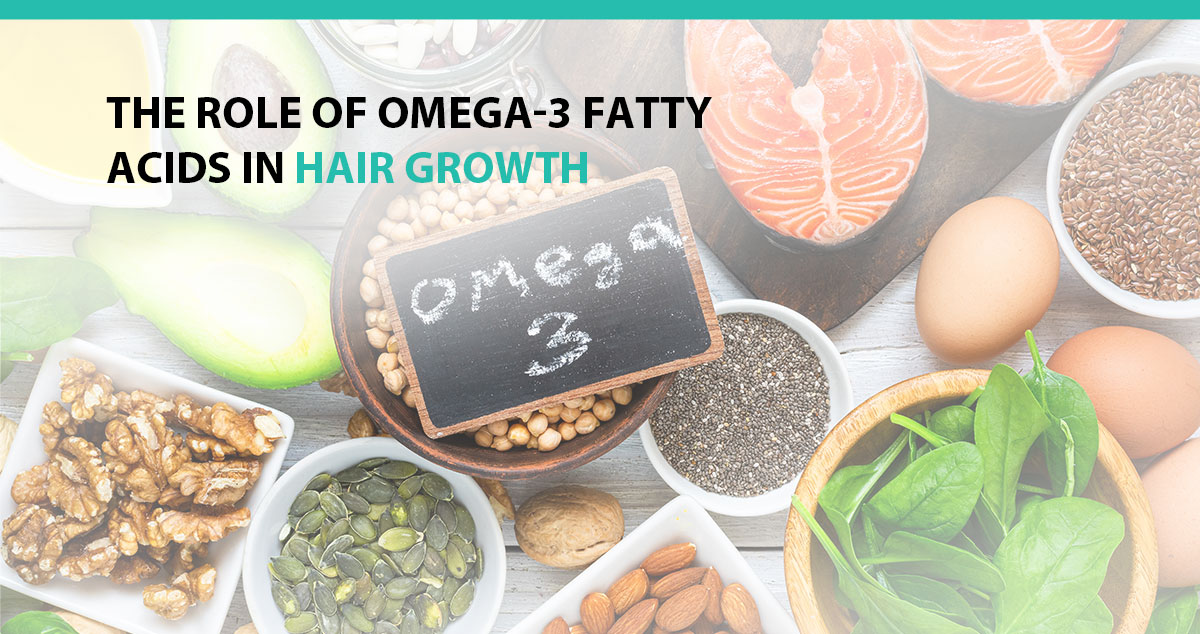
Nutrition plays an important role in maintaining overall health, including the normal growth and function of hair follicles. Among the essential nutrients that support general health are omega-3 fatty acids, a group of healthy fats found in certain fish, seeds, nuts, and plant oils.
Omega-3 fatty acids are involved in several biological processes, including cell membrane function and inflammatory regulation. Researchers have also investigated whether these nutrients may influence hair follicle activity and hair-loss conditions.
However, an important distinction exists between supporting overall nutritional health and directly treating hair loss. Although some research suggests a possible relationship between omega fatty acids and hair follicle biology, current evidence does not establish omega-3 supplementation as a standalone hair-growth treatment.
In this guide, we explain the different types of omega-3 fatty acids, their potential relationship with hair health, food sources, supplement considerations, and what scientific research currently tells us.
What Are Omega-3 Fatty Acids?
Omega-3 fatty acids are essential polyunsaturated fats that the body needs for normal biological functions.
They play roles in cell membrane structure, normal cellular signaling, and other physiological processes.
There are three primary types of omega-3 fatty acids:
1. Alpha-Linolenic Acid (ALA)
ALA is a plant-based omega-3 fatty acid found in foods such as flaxseeds, chia seeds, walnuts, and certain vegetable oils.
It is considered essential because the human body cannot produce it independently in sufficient amounts.
The body can convert some ALA into EPA and DHA, but this conversion is limited.
2. Eicosapentaenoic Acid (EPA)
EPA is a long-chain omega-3 fatty acid found primarily in fatty fish and seafood.
It participates in several biological processes, including the production of signaling molecules involved in inflammatory regulation.
3. Docosahexaenoic Acid (DHA)
DHA is another long-chain omega-3 fatty acid found in fatty fish and seafood.
It is an important structural component of cell membranes and supports several normal physiological functions.
Although ALA, EPA, and DHA belong to the same nutrient family, they are not interchangeable. Their dietary sources and biological roles differ.
How Are Omega-3 Fatty Acids Related to Hair Health?
Hair follicles are complex structures that require an appropriate environment and adequate nutrients to support their normal growth cycle.
Researchers have explored several possible ways in which omega fatty acids may influence hair follicle biology.
However, these potential mechanisms should not be interpreted as proof that eating more omega-3 will directly produce thicker or faster-growing hair.
1. Supporting Normal Cell Function
Hair follicles contain rapidly active cells that participate in the natural hair growth cycle.
Omega-3 fatty acids contribute to cell membrane structure and normal cellular processes throughout the body.
Their role in maintaining cellular function makes them relevant to research into skin and hair follicle biology.
However, there is currently insufficient clinical evidence to conclude that increasing omega-3 intake independently improves human hair density.
2. Involvement in Inflammatory Regulation
Omega-3 fatty acids are involved in the production of signaling molecules that help regulate inflammatory processes.
Researchers have investigated whether these pathways may influence certain inflammatory conditions involving hair follicles.
This is an interesting area of research, but it does not mean omega-3 supplements can treat inflammatory hair-loss disorders or replace appropriate medical treatment.
Conditions such as alopecia areata and scarring alopecia require specific medical evaluation and management.
3. Supporting Overall Nutritional Health
Healthy hair growth depends on several nutritional factors, including adequate protein, iron, zinc, and other essential nutrients.
Omega-3 fatty acids are part of a balanced diet and contribute to overall nutritional health.
However, having an adequate omega-3 intake does not guarantee protection against hereditary hair loss or other medical causes of thinning.
4. Potential Effects on Hair Follicle Biology
Laboratory and preclinical research has investigated how omega fatty acids may interact with cellular pathways involved in hair follicle development and growth.
Some experimental studies suggest potential biological activity involving dermal papilla cells and follicular signaling pathways.
However, results from laboratory experiments and animal studies cannot automatically be translated into proven benefits for people experiencing hair loss.
More controlled human research is needed.
What Does Scientific Research Say About Omega-3 and Hair Growth?
Research into omega-3 fatty acids and hair loss is developing, but the available evidence remains limited.
It is important to consider the quality of individual studies rather than relying only on supplement advertisements or general claims about nutritional benefits.
Findings From a 2023 Systematic Review
A systematic review published in JAMA Dermatology in 2023 evaluated 30 studies investigating nutritional supplements and hair loss.
The review identified potential benefits from several nutritional interventions.
One of the combinations evaluated included omega-3 and omega-6 fatty acids with antioxidants.
However, the findings do not establish that omega-3 alone produces hair regrowth because the interventions involved combinations of nutrients and other ingredients.
The authors also emphasized the importance of physician-guided decisions when considering hair-loss supplements.
Findings From a 2026 Scientific Review
A scoping review published in the Journal of Cosmetic Dermatology on September 7, 2026, examined the relationship between omega fatty acids and different hair-loss disorders.
The researchers included 21 studies, consisting of 15 preclinical studies and six clinical studies.
The review identified possible biological mechanisms and some promising clinical observations.
However, several limitations were identified:
- Many clinical studies examined multiple nutrients together.
- The independent effects of omega-3 were difficult to isolate.
- The available clinical studies were limited and varied in design.
- Some findings were inconsistent.
- More controlled human research is necessary.
The review concluded that current evidence does not support omega fatty acid supplementation as a standalone treatment for any alopecia subtype.
This is an important distinction for anyone considering fish oil or omega-3 supplements specifically for hair regrowth.
What does this mean for you?
Omega-3 fatty acids can be part of a healthy diet, but they should not be considered a replacement for medically established hair-loss treatments or an accurate diagnosis.
Best Food Sources of Omega-3 Fatty Acids
A balanced diet can provide omega-3 fatty acids from both animal and plant sources.
Here are some useful options to include in everyday meals.
1. Fatty Fish
Fatty fish are among the best dietary sources of EPA and DHA.
Examples include:
- Salmon.
- Sardines.
- Mackerel.
- Herring.
- Trout.
These foods also provide protein and other nutrients that contribute to overall health.
2. Flaxseeds
Flaxseeds are a plant-based source of ALA.
They can be included in:
- Breakfast cereals.
- Oatmeal.
- Smoothies.
- Yogurt.
- Salads.
Ground flaxseeds are commonly used because they are easier to incorporate into different meals.
3. Chia Seeds
Chia seeds contain ALA and dietary fiber.
They can be mixed into yogurt, smoothies, oatmeal, or other meals.
Their versatility makes them a convenient addition to a balanced diet.
4. Walnuts
Walnuts provide plant-based omega-3 fatty acids in the form of ALA.
They can be eaten as a snack or added to salads and breakfast dishes.
They also contain other nutrients and unsaturated fats that contribute to general nutritional health.
5. Soybeans and Soy Products
Soybeans are another plant-based source of ALA.
You can include soy products in your diet through:
- Tofu.
- Soy milk.
- Cooked soybeans.
- Edamame.
These foods also provide protein.
6. Flaxseed, Canola and Soybean Oils
Certain plant oils contain ALA and can be incorporated into everyday cooking.
Examples include flaxseed oil, canola oil, and soybean oil.
Use them according to their product directions and suitable cooking methods.
7. Algal Oil
Algal oil is derived from algae and provides DHA, with some products also containing EPA.
It can be an alternative source of marine omega-3 fatty acids for people who do not consume fish.
The exact composition depends on the product.
Animal-Based vs. Plant-Based Omega-3 Sources
Both animal and plant foods can contribute omega-3 fatty acids, but their forms differ.
| Food source | Main omega-3 type |
|---|---|
| Salmon | EPA and DHA |
| Sardines | EPA and DHA |
| Mackerel | EPA and DHA |
| Flaxseeds | ALA |
| Chia seeds | ALA |
| Walnuts | ALA |
| Soybeans | ALA |
| Canola oil | ALA |
| Algal oil | DHA, sometimes EPA |
One important consideration is that ALA conversion into EPA and DHA is limited.
Therefore, people following vegetarian or vegan diets may consider algal oil as an alternative source of DHA, depending on their nutritional requirements.
Should You Take Omega-3 Supplements for Hair Growth?
Omega-3 supplements are widely available in different formulations.
Common options include:
Fish Oil: Provides EPA and DHA in varying amounts.
Algal Oil: Provides plant-based DHA and, in some formulations, EPA.
Krill Oil: An additional marine source of omega-3 fatty acids.
Cod Liver Oil: Contains omega-3 fatty acids along with vitamins A and D.
Although these products can help increase omega-3 intake, there is no established omega-3 supplement dosage specifically for treating hair loss.
Taking additional supplements does not guarantee hair growth.
Before starting a supplement, consider:
- Whether your regular diet provides adequate omega-3.
- The reason you are considering supplementation.
- The amount of EPA and DHA in the product.
- Other ingredients included in the formulation.
- Existing medical conditions.
- Potential medication interactions.
High doses of omega-3 supplements may increase bleeding concerns when combined with anticoagulant medications such as warfarin.
Some people also experience digestive discomfort, heartburn, or an unpleasant aftertaste.
Discuss supplementation with a qualified healthcare professional, particularly if you take medication or have an upcoming surgical procedure.
Can Omega-3 Deficiency Cause Hair Loss?
Omega-3 fatty acids are important nutrients, and inadequate essential fatty acid intake can affect general health.
However, omega-3 deficiency should not automatically be assumed to be the cause of hair thinning.
Hair loss has many possible causes, including:
- Hereditary pattern hair loss.
- Hormonal changes.
- Iron deficiency.
- Thyroid conditions.
- Significant physical or emotional stress.
- Certain medications.
- Inflammatory scalp disorders.
- Other nutritional deficiencies.
The relationship between isolated omega-3 deficiency and common forms of human hair loss is not sufficiently established to use it as a general diagnosis.
If you are experiencing unexplained thinning or excessive shedding, a medical evaluation can help identify the underlying cause.
How to Build a Balanced Diet for Healthy Hair
Omega-3 fatty acids are only one part of a healthy nutritional pattern.
Your hair requires adequate amounts of several nutrients to support its normal growth cycle.
Consider these dietary principles:
Include Enough Protein
Hair is primarily composed of keratin, a structural protein.
Include suitable protein sources such as eggs, fish, beans, lentils, dairy products, tofu, and other protein-rich foods.
Eat Iron-Rich Foods
Iron is important for normal oxygen transport and other body functions.
Leafy vegetables, beans, lentils, and appropriate animal-based sources can contribute iron to your diet.
People with suspected iron deficiency should discuss appropriate testing with a healthcare professional.
Include a Variety of Fruits and Vegetables
Fruits and vegetables provide vitamins, minerals, and other nutrients that support overall health.
A varied diet is generally more useful than relying on a single hair-growth food.
Avoid Extreme Dieting
Severely restricting calories or following unbalanced diets may contribute to excessive hair shedding in some individuals.
Aim for an adequate and balanced dietary intake.
Avoid Unnecessary Supplements
Taking large amounts of vitamins and minerals without a demonstrated need can create health problems.
Nutritional testing may be appropriate when a deficiency is suspected.
Frequently Asked Questions About Omega-3 and Hair Growth
1. Can omega-3 fatty acids help hair growth?
Omega-3 fatty acids support normal biological functions and have been investigated for their potential role in hair follicle biology. However, current research does not establish omega-3 supplementation as a standalone treatment for hair loss.
2. Does fish oil help prevent hair loss?
Fish oil provides EPA and DHA, but there is insufficient evidence to conclude that taking fish oil alone prevents hereditary hair loss. It should not replace medically appropriate treatment.
3. Which foods are highest in omega-3 fatty acids?
Fatty fish such as salmon, mackerel, and sardines are good sources of EPA and DHA. Flaxseeds, chia seeds, walnuts, and certain plant oils provide ALA.
4. Is omega-3 good for the scalp?
Omega-3 fatty acids are involved in normal cellular and inflammatory processes. However, taking omega-3 supplements has not been established as a treatment for dry scalp, dandruff, or scalp inflammation.
5. How much omega-3 should I take for hair growth?
There is currently no established omega-3 dosage specifically for hair growth. Supplement requirements should be determined according to nutritional needs and medical advice rather than hair-growth marketing claims.
6. Can omega-3 deficiency cause thinning hair?
Severe essential fatty acid deficiency can affect skin and hair health, but it is not an established common explanation for typical hereditary pattern hair loss. Other nutritional and medical causes should also be considered.
7. Are plant-based omega-3 sources effective?
Plant sources such as flaxseeds, chia seeds, and walnuts provide ALA. The body converts only a limited amount of ALA into EPA and DHA. Algal oil can provide DHA and sometimes EPA for people who prefer a plant-based source.
8. Can I take omega-3 supplements with other hair-growth vitamins?
Potential interactions and excessive nutrient intake should be considered. Discuss your current supplements and medications with a healthcare professional before combining products.
9. Does omega-3 replace minoxidil or other hair-loss treatments?
No. Omega-3 supplements have not been established as a replacement for medically supported treatments for hereditary hair loss.
10. When should I consult a hair restoration specialist?
Consider a professional evaluation if you experience progressive thinning, a receding hairline, persistent shedding, or noticeable changes in hair density. An assessment can help determine the cause and identify appropriate treatment options.
Support Your Hair Health With Balanced Nutrition and Professional Guidance
Omega-3 fatty acids are valuable nutrients that contribute to normal health and cellular functions.
Foods such as salmon, chia seeds, flaxseeds, and walnuts can be part of a balanced diet. However, current scientific research does not establish omega-3 supplementation as an independent solution for hereditary hair loss or other forms of alopecia.
Maintaining proper nutrition is important, but persistent hair thinning may require more specific medical evaluation and treatment.
At Advanced Medical Hair Institute in Las Vegas, Dr. Joseph L. Williams and the team provide personalized hair restoration consultations for individuals experiencing different stages of hair loss.
Whether you are exploring nutritional approaches, non-surgical treatments, or hair transplantation, an individual assessment can help you understand the options appropriate for your condition.
Contact Advanced Medical Hair Institute to discuss your hair restoration concerns and explore suitable treatment options.
 ICONIER Digital Agency