


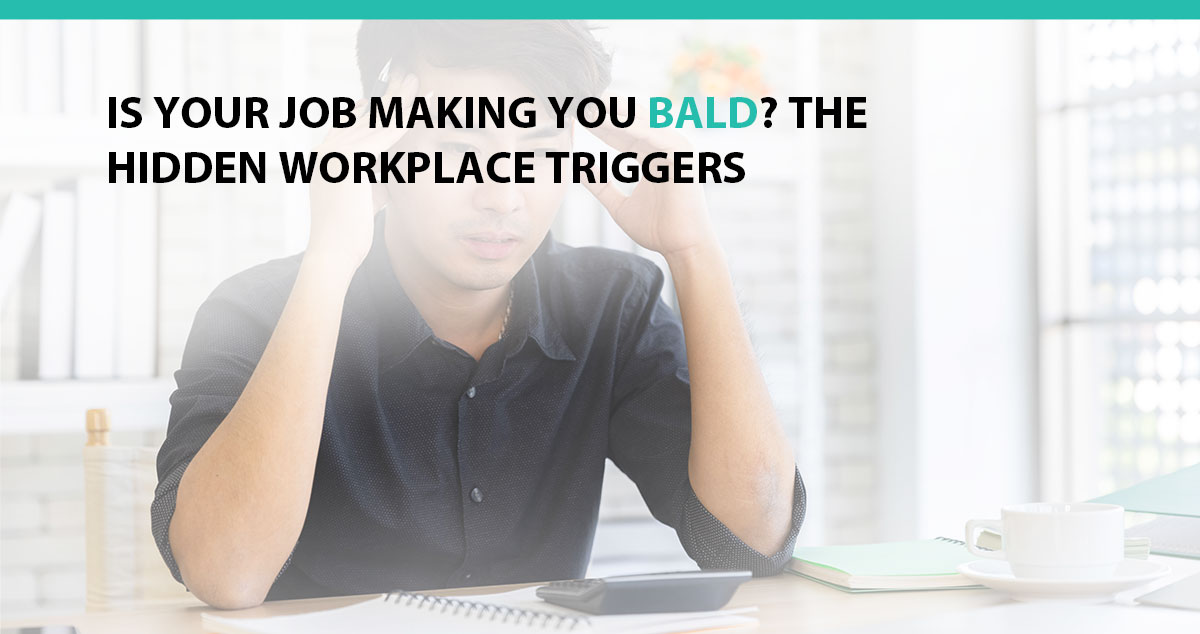
Most people blame their genetics when their hair starts thinning, but for many, the real culprit might be something far more unexpected: the workplace. Your job may not ask for your hairline, but it’s quietly taking it anyway.
From chronic stress and harsh lighting to skipped meals and nonstop Zoom calls, modern work culture has created the perfect storm for accelerating hair loss. And while you might think it’s “just part of getting older,” the truth is that many workplace triggers are preventable, especially when you catch them early.
At Advanced Medical Hair Institute, patients often arrive convinced that their hair loss “came out of nowhere,” only to realize that their daily routines have been nudging their follicles toward trouble for years.
What are the most common job-related hair loss triggers? And what can you do before it progresses into something more permanent?
Stress: The Workplace Pressure That Shows Up on Your Scalp
Whether you’re leading a team, meeting deadlines, or juggling customers, today’s professional demands are intense. Stress triggers cortisol, a hormone that has a direct effect on hair cycling. In high amounts, it can push follicles into the shedding (telogen) phase, leading to noticeable thinning.
This phenomenon (similar to what we discussed in Stress and Hair Loss and the emotional weight described in When Talking Is More Than Words) often shows up months after a stressful period. That means your hair loss today may be reflecting your workload from this spring… or last year.
Chronic stress can also magnify genetic pattern hair loss, causing faster recession or widening parts than you’d normally expect.
If your job leaves you feeling burned out, frazzled, or constantly exhausted, your hair might be sounding the alarm.
Poor Sleep and Shift Work: When Your Schedule Works Against You
Sleep is when your body resets, repairs, and restores. But if you’re working late nights, early mornings, double shifts, or rotating schedules, you’re denying your follicles the recovery they need.
Lack of sleep:
- elevates stress hormones
- weakens immune function
- disrupts hormonal balance
- slows follicle cycling
Sleep-related hair issues often mimic the diffuse thinning described in What Causes Hair Loss?, and may look more alarming in bathroom lighting and vanity mirrors.
If your work schedule makes good sleep feel like a luxury, your hair may feel the impact long before your performance reviews do.
Tight Headgear, Hard Hats, and Uniform Requirements
Some jobs don’t just affect your stress levels; they affect your scalp directly.
Workers who wear:
- construction helmets
- tight caps
- military headgear
- sports helmets
- restaurant head coverings
are sometimes unknowingly contributing to a form of hair loss called traction alopecia, a topic also touched on in Hair Loss Types May Be a Mouthful.
Constant friction and pressure can irritate follicles, weaken the hair shaft, and accelerate thinning around the sides, neckline, and crown.
If you remove your hat after a long day and notice tenderness, redness, or visible thinning in those areas, this may be your early warning sign. Wearing hats does not automatically mean your hair will suffer, but it could.
Office Lighting, Cameras, and the Rise of “Zoom Hairline Anxiety”
We’re living in a world where we see our faces more than ever, sometimes for hours a day, thanks to video meetings. Unfortunately, harsh office lighting or overhead fluorescents can make hair appear far thinner than it looks in person.
This phenomenon was explored in Zoom, Filters, and Hairlines, and it plays a huge role in why more people are seeking early hair restoration today.
Common issues include:
- light reflecting off wide parts
- shadows exaggerating temple recession
- camera angles emphasizing scalp visibility
- comparison to filtered or edited online images
For many, it’s not that their hair suddenly worsened; it’s that they’re finally seeing it from angles they never noticed before.
But heightened awareness often leads to valuable early intervention.
Nutritional Shortcuts: Fast Food, Coffee, and Missed Meals
Your follicles are small, but they’re hungry. They require a steady supply of iron, zinc, protein, biotin, and omega-3 fatty acids to maintain stable growth.
But busy professionals frequently:
- skip breakfast
- eat fast food at lunch
- rely on caffeine instead of nutrients
- snack on sugar instead of protein
- work through meals
These habits echo the concerns broken down in Vitamins, Minerals, and Supplements. Long-term nutrient gaps can trigger telogen effluvium, worsening thinning for months.
Combine poor nutrition with stress, and the hair loss can appear dramatic.
Why Acting Early Makes a Huge Difference
Workplace-related hair loss is often progressive. Small issues compound over time until one day, your hairline seems several years older than you are. Early evaluation can dramatically improve your options.
One thing is clear: The earlier you identify the cause, the more treatment options you’ll have.
Depending on your situation, Dr. Williams may recommend:
- lifestyle adjustments
- nutritional optimization
- preventive medical therapy
- Low-Level Laser Therapy (LLLT)
- or, when needed, artistic restoration through FUT or FUE
And in some cases, patients discover their hair loss is reversible without surgery, especially when it’s tied to temporary workplace stress.
When Your Career Advances but Your Hairline Retreats… We Can Help
The demands of modern work aren’t going away. But your hair loss doesn’t have to go with them.
If your job is contributing to:
- more shedding than usual
- widening parts
- temple recession
- crown thinning
- stress-related shedding
- or scalp irritation from headgear
then now is the time to take control, before more follicles stop cooperating.
At Advanced Medical Hair Institute, Dr. Joseph L. Williams uses over 15 years of experience and true artistic skill to diagnose the cause, protect existing hair, and restore what’s been lost.
Call 702-257-0888 (Las Vegas) or 888-357-0888 (toll-free) to schedule your private consultation and give yourself a promotion!