



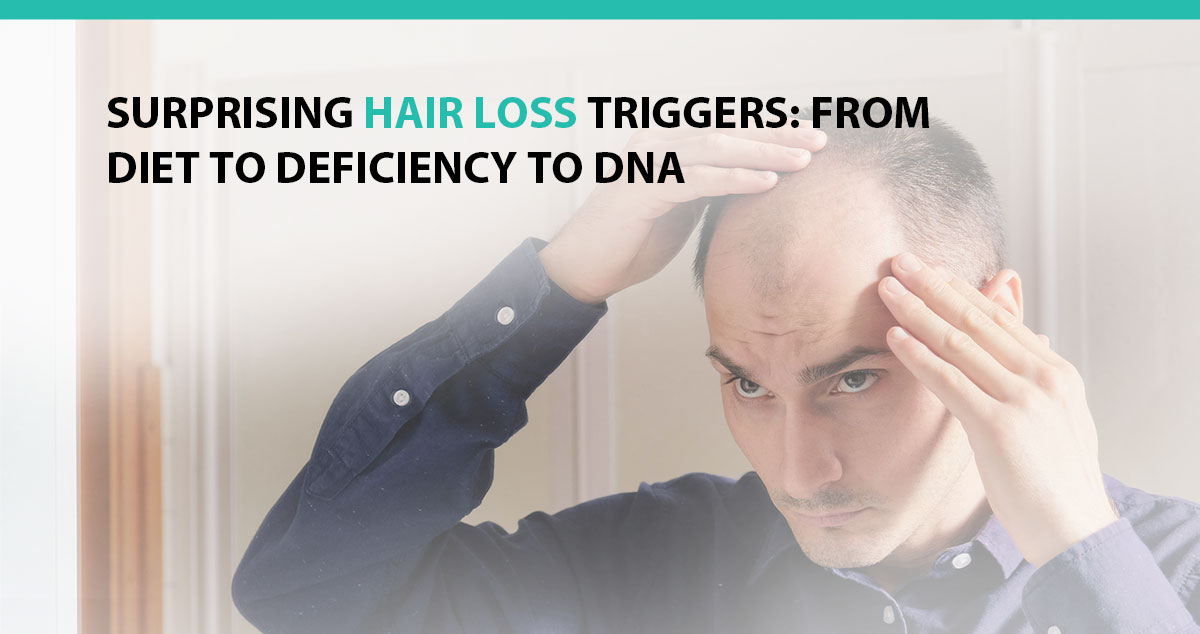
When most people notice thinning hair, they tend to blame genetics right away. And while your DNA plays a role, it’s rarely the only culprit. In truth, hair loss can be triggered by a surprising mix of nutritional deficiencies, lifestyle habits, and biological predispositions, many of which are within your control.
At Advanced Medical Hair Institute, we see every type of case imaginable, from patients who’ve recently changed diets or have lost weight to those whose genes simply pulled rank. Understanding these lesser-known triggers can help you take action before hair loss accelerates.
- When Diets Backfire: Nutritional Deficiencies and Hair Shedding
Your hair is a living structure that depends on a steady supply of nutrients to grow. Deficiencies in certain vitamins, minerals, and proteins can slow growth, weaken strands, and even trigger shedding.
Crash diets, intermittent fasting, or sudden lifestyle changes can deprive follicles of the nutrients they need. Patients who’ve experienced rapid weight loss or bariatric surgery, for example, often notice temporary thinning due to iron, zinc, or biotin deficiencies.
If this sounds familiar, your first step should be restoring balance through nutrition. A well-rounded diet that includes lean proteins, leafy greens, eggs, nuts, and omega-3-rich foods can help rebuild what’s been lost. Learn more about this connection in Nutrition, Lifestyle, and Hair Restoration: The Inside-Out Approach.
- The Power of Omega-3s: Fuel for Stronger, Healthier Hair
Omega-3 fatty acids aren’t just good for your heart; they’re vital for your hair. These essential fats work to reduce scalp inflammation, improve circulation, and strengthen follicles from the inside out.
Common sources include salmon, mackerel, chia seeds, walnuts, and flaxseed oil. Omega-3s also enhance the elasticity and shine of each strand while keeping your scalp moisturized, especially in dry climates.
Adding more omega-3s to your diet is a small step that can yield noticeable improvements in texture and volume. Visit The Role of Omega-3 Fatty Acids in Hair Growth to explore how this simple nutrient can work alongside professional treatments like FUT and FUE.
- Vitamins and Minerals: The Unsung Heroes of Hair Growth
When it comes to hair, balance is everything. Too little or too much of certain vitamins can both lead to problems.
- Iron helps deliver oxygen to the follicles. Deficiency often leads to diffuse shedding, particularly in women after pregnancy or significant weight loss.
- Zinc regulates scalp oil glands and supports new cell growth.
- Biotin (Vitamin B7) and other B Vitamins fuel keratin production, essential for strong, healthy strands.
- Vitamin D “wakes up” dormant follicles and supports growth cycles.
- Protein, known as the building block of hair, forms the structure of every strand. Without enough dietary protein, hair becomes brittle and breaks easily.
In moderation, caffeine-based shampoos and serums can also help stimulate follicles, but excessive coffee or energy drinks can have the opposite effect by raising stress hormones.
For more guidance on balancing your intake, visit Vitamins, Minerals, and Supplements: The Good, the Bad, and Your Hair.
- The Genetic Wild Card: When DNA Has the Final Say
Even with the perfect diet and hair care routine, genetics still play a significant role in hair loss patterns. Researchers have made remarkable progress in identifying the genes responsible for hair thinning, revealing that androgen receptors (proteins that bind to hormones like testosterone) are often the main switch.
Breakthroughs in the past two decades have uncovered more than 280 genetic markers associated with male pattern baldness, alongside discoveries in stem cell signaling and gene-editing technologies. While these findings haven’t yet produced a permanent “cure,” they’ve dramatically advanced treatment options, from 5α-reductase inhibitors like Hair MD Rx to potential future gene therapies.
If you’re fascinated by the science behind it all, take a look at 8 Amazing Genetic Breakthroughs in Hair Loss Research to see how close science is getting to changing the story of hair restoration.
- When to Seek Help: Connecting the Dots Between Triggers
While home remedies and nutrition adjustments can help, persistent thinning or pattern-based loss should always be evaluated by a medical professional. Dr. Joseph L. Williams, MD, FACS, FAACS, has more than 15 years of experience diagnosing the root causes of hair loss, whether hormonal, nutritional, or hereditary.
Through a personalized consultation, he can identify the true source of the problem and recommend the best treatment options, including Follicular Unit Transfer (FUT), Follicular Unit Excision (FUE), Low-Level Laser Therapy (LLLT), and Scalp Micropigmentation (SMP).
The sooner you seek professional insight, the better your chances of preserving your existing hair and achieving a natural, undetectable restoration. For more details on taking early action, read The Sooner, The Better: Why Early Signs of Hair Loss Matter.
The Bottom Line
Hair loss isn’t always a matter of fate; it’s often a message from your body. By paying attention to what you eat, how you live, and what’s in your genetic blueprint, you can take control of your hair health before thinning becomes irreversible.
At Advanced Medical Hair Institute, we combine medical science, artistry, and compassion to help patients understand the full picture, from diet and deficiency to DNA.
If you’re ready to uncover your own hair loss triggers and explore proven solutions, schedule a consultation with Dr. Williams today at 702-257-0888 (Las Vegas) or 888-357-0888 (toll-free). Your journey to thicker, healthier hair starts here. And now.